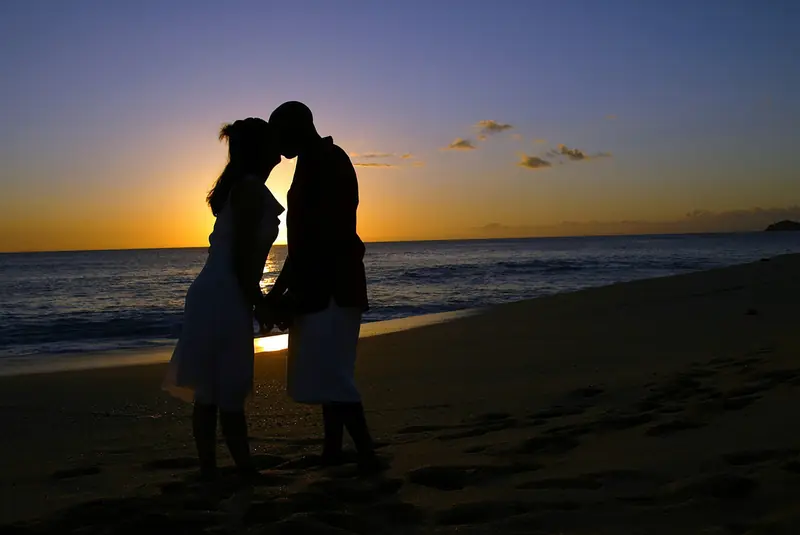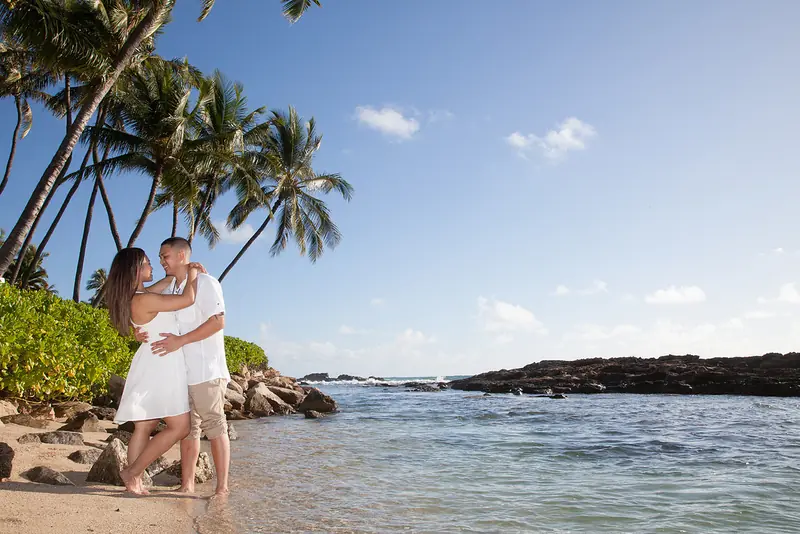
Many of the couples I photograph live somewhere else. They’ve fallen for Oʻahu on a trip, or they have family here, or they simply want their guests to feel like they’re on vacation for the whole weekend. What they all share is the same worry: how do you plan something this important when you can’t visit the venue on a whim?
Here is the approach I’ve seen work, written from the photographer’s side of the table — the person who sees every timeline play out in real time.
Start with a planner, then a venue
For a full wedding with guests, a local planner is the single best investment you can make. They know which venues handle rain gracefully, which vendors show up early, how long it really takes to drive from town to the North Shore on a Saturday, and which permits apply where. A planner also becomes your eyes on the ground: they walk the site, taste the menu and sit in the vendor meetings you can’t attend.
Your planner and venue then shape everything else. Once you have both, the rest of the team falls into place quickly. I wrote more about how photographers and planners work together in the photographer–planner relationship.
A working timeline
This is the sequence I suggest for a full wedding weekend. Peak-season Saturdays and sunset ceremonies book first, so earlier is always easier.
12 to 18 months out
- Set your budget and guest count. These decide your venue more than anything else.
- Hire your planner.
- Choose your season. Read the best time of year to marry on Oʻahu before you fall for a date.
- Shortlist and book a venue with a covered backup. See choosing a resort or estate venue.
9 to 12 months out
- Book your photographer. I photograph only; if you want traditional video, book a separate filmmaker. Most couples reserve 6–12 months ahead; a 30% retainer holds the date.
- Send save-the-dates. Destination guests need time to request leave and find fares.
- Reserve a room block near the venue and plan transportation for the welcome evening and wedding day.
6 to 9 months out
- Book hair and makeup, florals, catering, music and an officiant licensed in Hawaiʻi.
- Plan the weekend: welcome dinner or lūʻau, rehearsal, wedding, farewell brunch. See guest experience and welcome events.
- Decide on multi-day coverage so your photographer can plan around the whole weekend.
2 to 4 months out
- Finalize attire with the climate in mind (what to wear in Hawaiʻi light).
- Build the day-of timeline with your planner and photographer, working back from sunset.
- Confirm permits for any beach or park portraits (permit guide).
The last 30 days
- Apply for your marriage license online, then meet a license agent together in person — no sooner than 30 days before the ceremony. Both of you need valid photo ID. Details are in my Hawaiʻi marriage license guide.
- Send your final shot list and family-photo groupings.
Do you need a site visit?
It helps, but it isn’t essential. Many couples make one trip six to nine months out to see the venue, meet their planner and do an engagement session with me — which doubles as a chance to get comfortable in front of the camera before the wedding. If you can’t travel, ask your planner for a video walk-through at the time of day your ceremony will happen, so you see the real light.
Travel and jet lag
Hawaiʻi Standard Time doesn’t change for daylight saving. Oʻahu sits two hours behind the West Coast in winter and three hours behind in summer, and five to six hours behind the East Coast. International guests may be crossing the date line.
- Arrive early. I suggest couples land at least three days before the wedding. It leaves room for a delayed flight, your license appointment, and a full night’s sleep after the welcome event.
- Use the jet lag. East Coast guests wake early here. That’s a gift for a sunrise portrait session.
- Carry the essentials. Your dress, suits, rings and license documents travel with you, not in checked luggage.
Looking after your guests
When people fly a long way for you, the small things matter: clear travel information, a welcome bag with water and sunscreen, and transportation so nobody drives after the reception. Hawaiʻi law bans the sale of sunscreens containing oxybenzone or octinoxate to protect the reefs, so a mineral sunscreen is the thoughtful choice for welcome bags. Share a simple weekend schedule, and let guests know which events are casual and which are formal.
Building your vendor team
For a destination wedding, fewer and better vendors beat a long list. Look for people who work together often, answer quickly across time zones, and are comfortable with outdoor weather calls. Ask each one how they handle rain, what time they arrive, and who covers for them in an emergency.
- Planner first. They often recommend the rest of the team.
- Photographer and videographer as a pair. I’m photography only. If you’d like traditional video, I’m happy to refer a videographer I trust, and we’ll plan positions together so we stay out of each other’s frames.
- Florals that survive the climate. Local florists know which flowers hold up in heat and wind, and how to keep lei fresh.
- Hair and makeup that last. Island artists know how humidity behaves.
When you’re ready, see my trusted Oʻahu vendors — the planners and florists I recommend.
Questions to ask before you book anyone
- Have you worked at our venue, or nearby, before?
- What’s your rain plan and decision time?
- How do you communicate with couples who live in another time zone?
- What’s included, and what costs extra — travel, tax, overtime?
- What do you need from us, and by when?
Where photography fits
For a full wedding weekend, I recommend one of my top collections:
- Mōʻī — from $6,900. Up to ten hours with two photographers, a 12×12 heirloom album, a custom song and cinematic AI film made from your photos, and a mini session at your welcome party.
- Kamaliʻi Wahine — from $5,200. Up to eight hours with two photographers, an engagement session and a 10×10 album.
- Kuʻuipo — from $3,800. Up to six hours, plus an engagement or day-after session.
Additional coverage is $250 per hour and a second photographer is $150 per hour, so the weekend can be shaped exactly around your events. Travel anywhere on Oʻahu is included; neighbor islands are by quote. Intimate ceremonies start at $1,650 if you’re planning something smaller. Your full gallery arrives within 1 to 2 weeks. See everything on the investment page and the weddings page.
Frequently asked questions
How far in advance should we plan a destination wedding on Oʻahu?
For a full wedding with guests, 12 to 18 months gives you the best choice of venues and vendors. Photographers for peak-season Saturdays are usually booked 6 to 12 months ahead.
Do we need a wedding planner for a Hawaiʻi wedding?
For a full wedding with guests, I strongly recommend one. A local planner handles vendor coordination, permits, logistics and the site visits you can’t make from the mainland.
When should we arrive on Oʻahu before the wedding?
At least three days before. You’ll need time to meet a marriage license agent in person together, recover from the flight and enjoy the welcome events.
Is Hawaiʻi on daylight saving time?
No. Hawaiʻi Standard Time stays the same all year, so the time difference with the mainland changes when the mainland switches clocks.
Can you photograph our whole wedding weekend?
Yes. My Mōʻī collection includes a welcome-party mini session, and any collection can add hours at $250 per hour for the rehearsal, welcome dinner or a day-after session.
Sources
- Hawaiʻi Department of Health — Marriage and Civil Union Licenses
- Hawaiʻi Revised Statutes §342D-21 — sunscreen sale restrictions