When couples ask me which venue to choose, I rarely answer with a name. I answer with questions. Which way does the ceremony face? Where does everyone go if it rains at 4:30? Can the photographer move freely, or are there restricted areas? A venue can look perfect in a brochure and still fight you all day. Another, less famous, can make every hour easy.
This guide covers the two kinds of venue most destination couples consider for a full wedding on Oʻahu — resorts and private estates — and how to judge either from a distance.
Resort or private estate?
Resorts and historic hotels
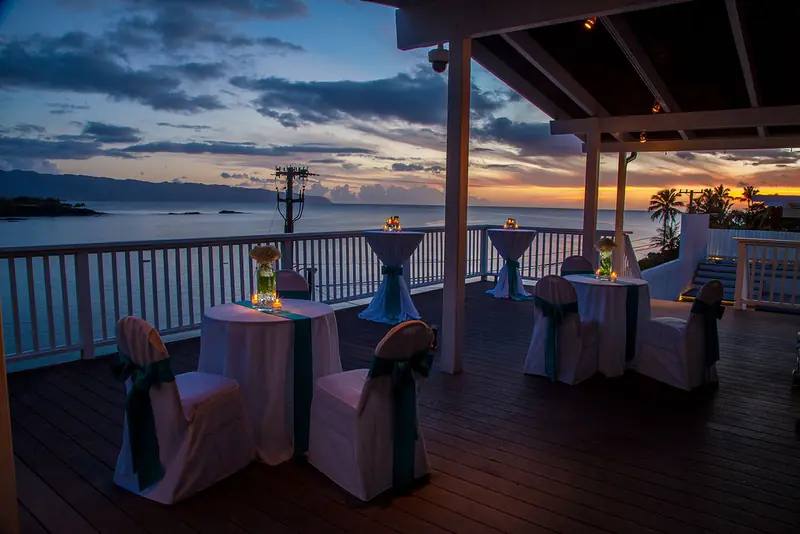
Waikīkī’s grand hotels and the island’s resorts offer something mainland couples value enormously: everything in one place. Guests sleep, eat and celebrate on one property, catering and staff are on site, and a covered ballroom or lanai is usually your rain plan.
- Strengths: simple logistics, built-in backup spaces, room blocks, experienced banquet teams.
- Watch for: preferred-vendor lists, fees for outside vendors, rules about where photography is allowed, other weddings on the same day, and public areas where hotel guests may wander into the background.
Private estates
Oceanfront and garden estates on the North Shore, the windward side and the south shore give you privacy and a blank canvas. They suit couples who want a styled, editorial look and a guest list that feels like a house party.
- Strengths: privacy, freedom of design, long tables on the lawn, no strangers in the frame.
- Watch for: everything must be brought in — tents, lighting, restrooms, generators, catering kitchens. Ask about noise curfews, guest limits, parking and shuttles, and whether the property is permitted for events.
Either way, a local planner is invaluable here. They know which properties are legally permitted for events and which only look like they are. See planning a luxury Oʻahu wedding from the mainland.
Looking for a planner who knows Oʻahu venues? See my trusted Oʻahu vendors.
Read the light before you sign
As a photographer, this is where I can help most. A few minutes with a map tells me how your day will look.
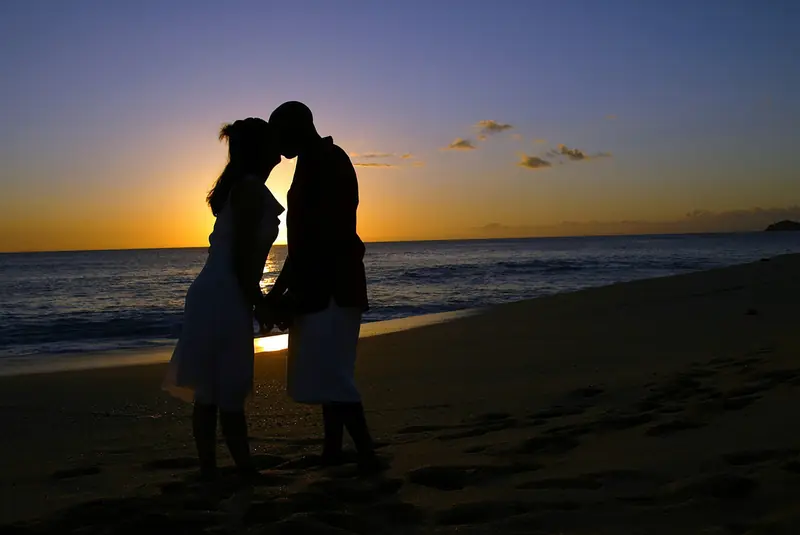
- Ceremony orientation. If the sun sets behind your guests, you’ll be squinting into it. If it sets behind you, the guests see a glowing silhouette and I can light your faces. Ideally, the sun is to one side and low.
- Ceremony time. A good rule of thumb on Oʻahu is to start the ceremony 90 minutes to two hours before sunset, so portraits fall in the last golden hour. Sunset ranges from about 5:50 pm in December to about 7:15 pm in June and July.
- Shade. Where will cocktail hour happen in full sun? A tree line or covered lanai keeps guests comfortable and photographs beautifully.
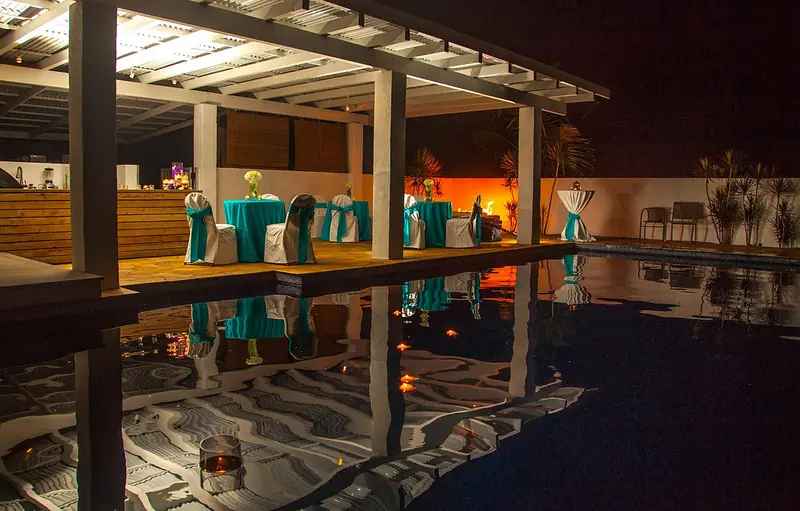
- Reception light. Bistro lights, candles and lanterns matter more than you think once the sun goes down.
More on timing in the best time of year (and day) to marry on Oʻahu.
The rain plan is part of the venue
Island showers are usually brief, and the light right after rain can be the best of the day. But you need a real plan: a covered space large enough for everyone, ready to switch to on the day without a scramble, and a decision time agreed with your planner. Ask to see photos of the backup space set for an event, not empty.
Photography rules to ask about
Some properties on Oʻahu restrict outside photographers, limit where portraits can be taken, or require you to book their in-house team. That isn’t a problem if you know in advance. It is if you find out the week of the wedding. Ask every venue:
- Are outside photographers and filmmakers welcome? Is there a fee or insurance requirement?
- Where are portraits allowed — beach, gardens, lobby, rooms?
- Are drones allowed? (Many places prohibit them or require clearances.)
- Is the beach in front of the property private or public? On Oʻahu, the sandy beach below the vegetation line is generally state land, which means a ceremony there needs its own state permit. See Oʻahu beach wedding and photo permits.
Questions to ask every venue
- How many events do you host on the same day, and how are they separated?
- What is the indoor or covered capacity for the rain plan?
- What time can vendors arrive, and when must the event end?
- Are there sound limits or curfews?
- Is there a suite or room for getting ready with good window light?
- How do guests arrive, and where do they park?
- Is there an accessible route for older guests from parking to ceremony and reception?
Getting-ready spaces: the first photographs of the day
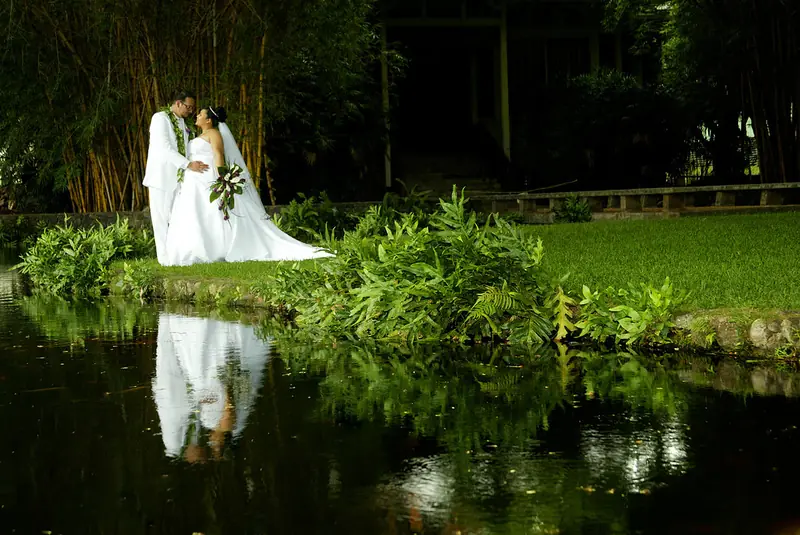
The first hour of coverage happens wherever you get ready, and it sets the tone for the gallery. Ask for a suite with large windows, enough floor space for the wedding party, and somewhere uncluttered to hang the gown. Soft window light is the most flattering light there is; a dark room with a single lamp is the hardest. If you and your partner are getting ready in different places, ask how far apart they are — with two photographers, we can cover both at the same time.
Reception light and sound
Once the sun goes down, the venue’s lighting becomes your photographs. String lights, candles and uplighting create warmth and depth; bare floodlights flatten everything. Ask what’s allowed — open flames, hanging lights, sound limits — and when music must end. If the reception closes early, plan an after-party space nearby so the night doesn’t end abruptly.
Accessibility for your guests
Destination weddings often bring grandparents and older relatives on a long trip. Look for level paths from parking to ceremony, shade, seating, restrooms close by, and a short walk to the reception. It makes the day easier for everyone, and it shows in the photographs.
Where I can help
Send me your shortlist and your date, and I’ll tell you how each option will photograph at your ceremony time — where the sun will be, where we’ll do portraits, and how the day will flow from ceremony to dinner. Travel anywhere on Oʻahu is included in all my collections, so the venue never changes my fee.
For a full wedding, most couples choose Mōʻī (from $6,900, up to ten hours, two photographers, album, custom song and cinematic AI film, and a welcome-party mini session) or Kamaliʻi Wahine (from $5,200, up to eight hours with two photographers and an album). See the investment page and weddings; for something smaller, intimate ceremonies start at $1,650 on the elopement page.
Frequently asked questions
Should we choose a resort or a private estate on Oʻahu?
Resorts make logistics simple, with rooms, catering and covered backup spaces in one place. Private estates offer privacy and design freedom, but everything has to be brought in and the property must be permitted for events.
What time should our ceremony start?
A good rule of thumb is 90 minutes to two hours before sunset, so portraits fall in the last golden hour. Sunset ranges from about 5:50 pm in December to about 7:15 pm in midsummer.
Can we use an outside photographer at a resort?
Often yes, but some properties restrict outside photographers or charge fees. Ask before you sign, and check where portraits are allowed.
Is the beach in front of a hotel private?
Generally no. On Oʻahu the sandy beach below the vegetation line is usually state land, so a ceremony on it needs a state permit even if the hotel lawn doesn’t.
Does the venue location change your price?
No. Travel anywhere on Oʻahu is included in every collection.