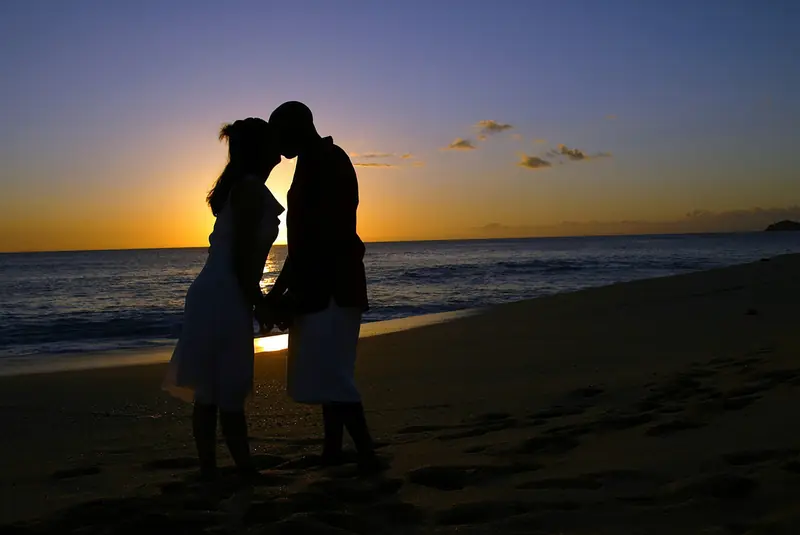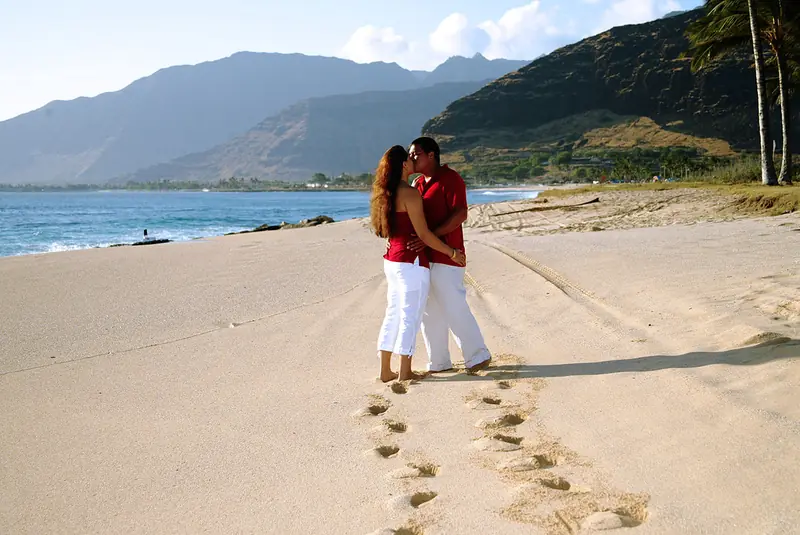
Couples planning from the mainland usually start with a picture in their head: palms, turquoise water, a long veil in the wind. Oʻahu can give you all of that, but the island isn’t one backdrop. The south shore is polished and urban, the North Shore is wild and slow, the windward side is mountains and pale sand, and the west side holds the late sun. Where you stand changes your light, your crowd, your permit and your schedule.
This guide is about public places I photograph often — for portrait sessions on a wedding day, for an intimate ceremony, and for the day-after session I recommend to most of my couples. If your ceremony is at a hotel or private estate, use it to plan the portraits you’ll add on the way to dinner.
First, match the coast to the time of day
- Sunrise: east- and windward-facing beaches catch the first light, with mountains glowing behind you. Early starts also mean quiet beaches.
- Sunset: south- and west-facing shores take the warm, low sun over the water — the classic Hawaiʻi image.
- Overcast or rain: gardens and forest paths. Soft, even light flatters skin and makes greens look deep and lush.
Hawaiʻi doesn’t use daylight saving time, so sunset moves through the year: roughly 5:50 pm in late November and December, and about 7:15 pm in late June and July. I break that down month by month in the best time of year (and day) to marry on Oʻahu.
Waikīkī and the south shore
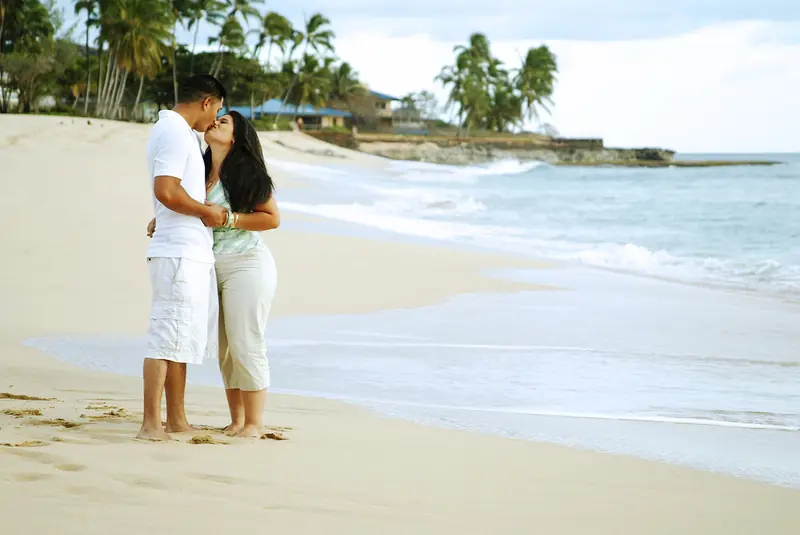
Waikīkī pairs world-famous beach scenery and views of Lēʻahi (Diamond Head) with grand historic hotels and shady parks. It’s ideal when your guests are staying in town and you want portraits without a long drive in formal wear.
- Best light: early morning is softest and quietest on the sand; late afternoon works beautifully in gardens and on hotel lawns.
- Good to know: Waikīkī is busy by mid-morning. For portraits on the beach itself, sunrise gives you space and clean backgrounds.
- On the permit list: Duke Kahanamoku Beach appears on the state’s Wiki Permits beach list for ceremonies.
The North Shore
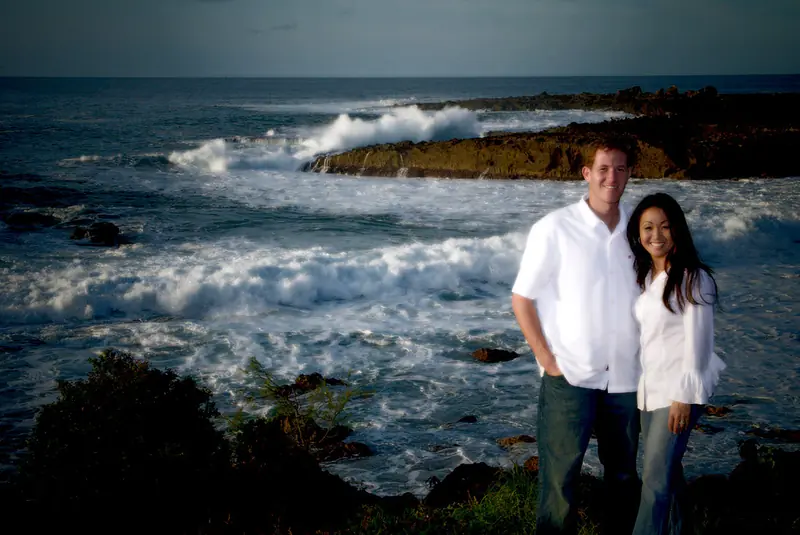
The North Shore — Haleʻiwa, Waimea and Sunset Beach — feels a world away from the city. It suits couples who love wild water, a relaxed pace and long golden evenings.
- Seasons matter: winter brings big surf. It looks spectacular as a backdrop, and I keep couples well back from the water on high-surf days. Summer is calmer and better for anything in or near the ocean.
- Best light: the hour before sunset is the classic choice.
- On the permit list: Haleʻiwa Aliʻi Beach, several Sunset Beach sections and Waimea Bay Beach appear on the state list, among others.
The windward and east side
Kailua, Lanikai, Waimānalo and Makapuʻu are where couples go for pale sand, turquoise shallows and green ridgelines. This coast faces the morning sun and the trade winds.
- Best light: sunrise, with the islets offshore and the mountains catching the first warm light.
- Wind: trade winds are part of the look here. They give you movement in a veil or a dress, but plan your hair accordingly (see what to wear for Hawaiʻi wedding photos).
- Neighbors: several of these beaches front residential streets with limited parking. Keep groups small and quiet, and arrive early.
- On the permit list: Kailua Beach, Lanikai Beach, Waimānalo Bay Beach and Makapuʻu Beach appear on the state list.
The leeward and west side
The Waiʻanae coast holds the latest light on the island and long, uncrowded beaches. It’s a longer drive from town, so I usually pair it with a sunset-only plan rather than a full day of moving around. Ask me about current conditions and access before choosing a spot here.
Gardens and forests: the best rain plan on the island
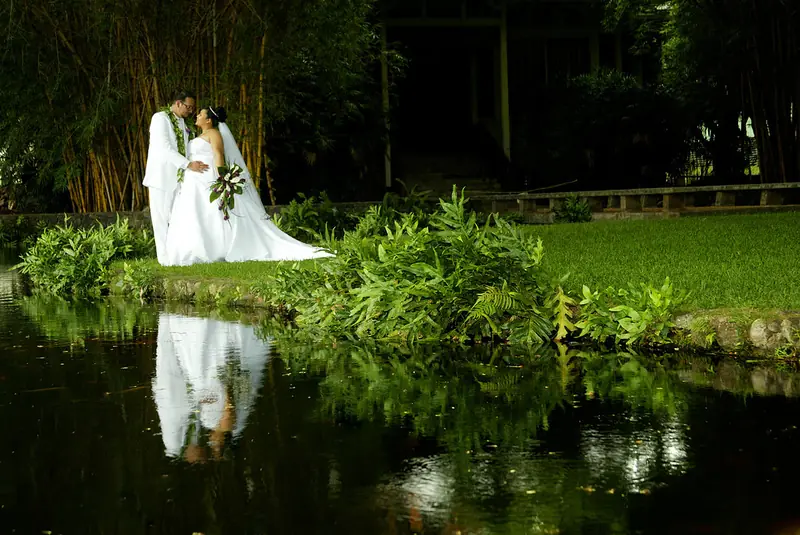
Every outdoor wedding plan on Oʻahu needs a soft backup. The City and County of Honolulu runs five botanical gardens — Foster, Liliʻuokalani, Hoʻomaluhia, Wahiawā and Koko Crater — and each one allows weddings and photography by permit. Under cloud, these places glow.
- Permits: apply at least three weeks ahead through the city’s Parks Permit Office, with proof of liability insurance. Commercial photography requires its own permit.
- Guest limits are set by parking: 50 at Foster and Hoʻomaluhia, 30 at Wahiawā and Koko Crater, 25 at Liliʻuokalani.
- Drones are prohibited in the gardens without multiple agency clearances.
How permits change your plan
Where you stand decides who issues the permit. The sandy beach below the vegetation line is generally state land, even when it fronts a county park, so a ceremony there needs a state Wiki Permits right-of-entry. State parks require a special use permit submitted 45 days ahead. City parks and gardens go through the Honolulu Parks Permit Office. I explain the details in Oʻahu beach wedding and photo permits.
The rules also shape the look. Beach permits don’t allow arches, chairs (beyond what elderly or disabled guests need), tables, tents or amplified sound, and the whole event, setup to cleanup, must fit within two hours. If you’re dreaming of a floral arch and rows of white chairs, that’s a resort lawn or a private estate, not a public beach. See choosing a resort or estate venue on Oʻahu.
Places I don’t feature
Some well-known private properties on Oʻahu restrict outside photography or require you to book through them. I don’t feature those here. If a venue you love is on your list, tell me early and I’ll help you check its photography rules before you commit.
My honest shortlist advice
- Choose your coast by time of day, then your spot.
- Keep portrait locations within a short drive of your ceremony or dinner.
- Always hold a second site; Wiki Permits even asks for a primary and an alternate.
- Leave the beach as you found it. Take only photographs.
When you know your date, send it over and I’ll suggest two or three spots that fit your timeline, your guests and the light. You can see collections on the investment page, or read about full weddings and intimate ceremonies.
Frequently asked questions
What is the best beach on Oʻahu for wedding photos?
It depends on the time of day. East and windward beaches are best at sunrise; south and west-facing shores are best near sunset. Waikīkī is convenient for town hotels, and the North Shore suits couples who want a wilder, quieter feel.
Do we need a permit for photos on an Oʻahu beach?
A ceremony on a state beach needs a Wiki Permits right-of-entry. Photography rules depend on who manages the land; city parks and gardens require a permit from the Honolulu Parks Permit Office. I’ll tell you what your spot needs.
Can we have an arch and chairs on the beach?
Not on state beaches under a Wiki permit. Arches, tables, tents and chairs (beyond those needed by elderly or disabled guests) aren’t allowed. A resort lawn or private estate is the right choice for a styled ceremony.
What if it rains?
Showers are usually brief. We keep a covered or garden backup and shift portraits into the softer light after the rain.
How far apart should our locations be?
Ideally a few minutes. Long drives in formal wear eat into your best light, so I usually suggest one main spot plus one nearby.
Sources
- DLNR Wiki Permits — Beach Locations list (as of May 9, 2025)
- DLNR Wiki Permits — General Terms and Conditions
- DLNR Land Division — Commercial Activities (state shoreline jurisdiction)
- Hawaiʻi Film Office — Elopement & Wedding Photography
- Honolulu Botanical Gardens — Wedding and Photography permits